Key Takeaways
- Neurotransmitters are modulators rather than primary drivers of illness.
- Psychiatric disorders can be understood as network dysfunctions.
- Precision psychiatry requires identifying and modulating dysregulated networks.
Psychiatry has traditionally been practiced through a neurochemical lens, focusing on neurotransmitter imbalances such as serotonin, dopamine, and norepinephrine. While this model has provided a useful pharmacological framework, it fails to adequately explain clinical heterogeneity, treatment resistance, and the dynamic nature of psychiatric illness.
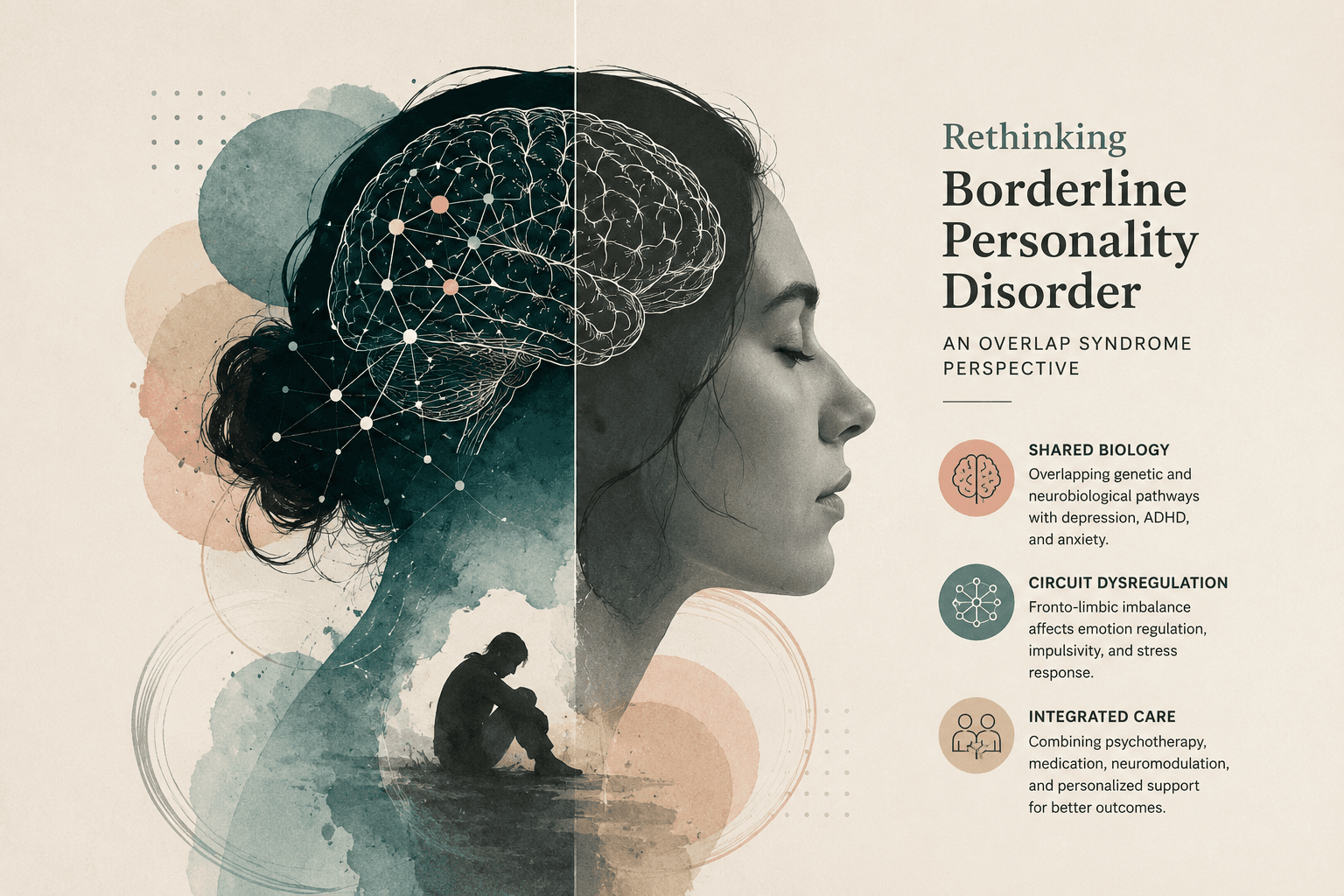
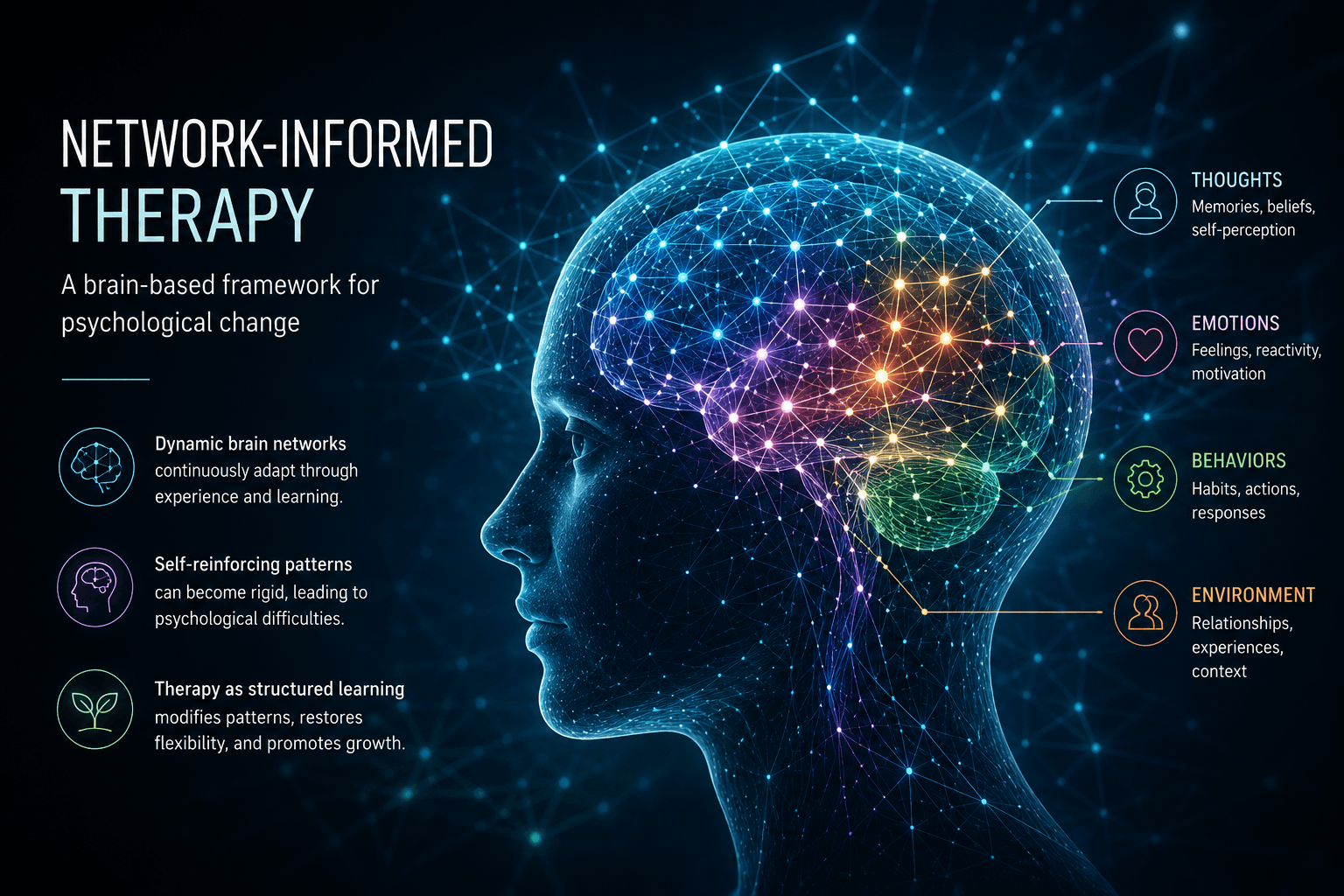
Emerging evidence from functional neuroimaging, electrophysiology, and neuromodulation suggests that psychiatric disorders are better conceptualized as network-level dysfunctions rather than isolated chemical deficits. Integrating a network-based framework into clinical psychiatry is essential for improving diagnostic precision, treatment selection, and overall patient outcomes.
The Limitation of the Neurochemical Model
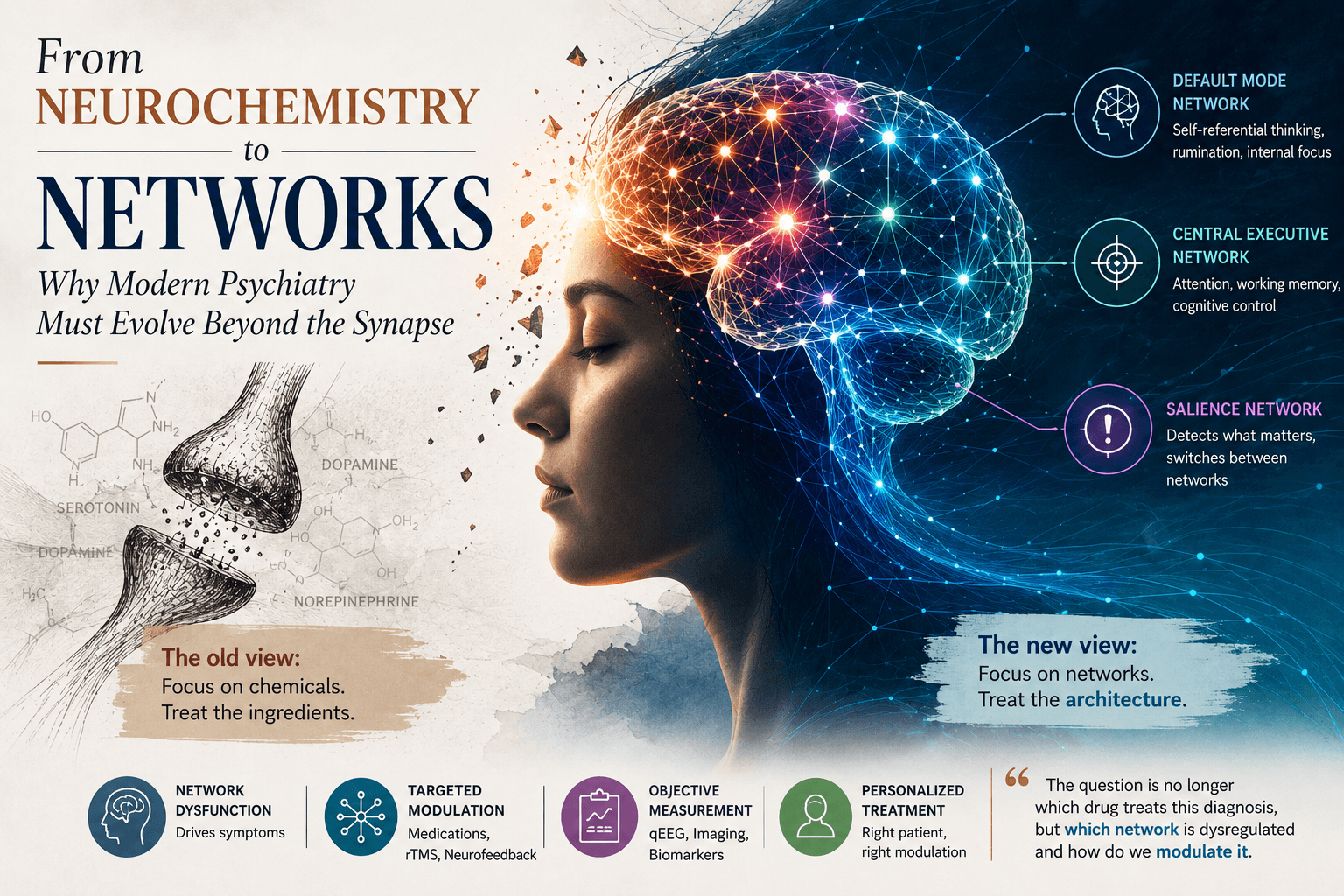
The chemical imbalance model simplifies psychiatric illness into deficiencies or excesses of neurotransmitters. However, patients with similar symptoms respond differently to the same drug. The delayed onset of antidepressant action contradicts immediate synaptic changes, and many conditions exhibit state-dependent variability not explained by static chemistry. This suggests that neurotransmitters are modulators, not primary drivers.
Psychiatry has been treating the ingredients, while ignoring the architecture.
The Brain as a Networked System
The brain operates as a set of dynamic, interacting networks, not isolated regions. Core networks include the Default Mode Network (DMN), the Central Executive Network (CEN), and the Salience Network (SN). Disorders emerge from hyperactivity, hypoactivity, or dysfunctional switching between these systems.
Psychiatric Disorders as Network Dysfunctions
Depression is characterized by DMN dominance combined with reduced CEN activity. ADHD involves impaired CEN function with DMN intrusion. OCD presents as a hyperactive salience network coupled with motor loops, while bipolar disorder reflects unstable oscillation between networks.
Psychotropics as Network Modulators
Viewing psychotropic medications through a network lens reframes their mechanisms of action. SSRIs reduce DMN overactivity. Stimulants enhance CEN function. Mood stabilizers reduce network oscillation. Antipsychotics reduce aberrant salience signalling. Ketamine enables a network reset, explaining its rapid antidepressant effects.
Neuromodulation
Repetitive transcranial magnetic stimulation (rTMS) and neurofeedback directly modulate brain networks. These approaches are spatially targeted, network-specific, and synergistic with pharmacotherapy, offering new avenues for treatment-resistant conditions.
The Role of qEEG
Quantitative EEG (qEEG) provides objective, data-informed insights into brain network function. Coherence measures connectivity strength, phase lag reveals timing relationships between regions, and amplitude reflects regional activity levels. Together, these metrics allow for a more precise, individualized understanding of network dysfunction.
The Future of Precision Psychiatry
A network-based framework enables personalized treatment, a better understanding of treatment resistance, and the integration of multiple therapeutic modalities. The key question is no longer which drug treats a diagnosis, but which network is dysregulated and how it can be effectively modulated. The psychiatrist becomes a system regulator.
From: Which drug treats this diagnosis? To: Which network is dysregulated and how do we modulate it?
Conclusion
Psychiatry must evolve beyond neurotransmitters into a network-based understanding of mental illness. This shift enables more precise, effective, and integrated care — moving the field toward a genuine precision psychiatry grounded in the architecture of the brain itself.